Janna and I are traveling back to Southern California today after a wonderful three-week visit with friends and family for Christmas and New Year's. It's been a great trip and a joyful vacation. Perhaps I'll write a summary about it in the next few days.
For now, though, I have a different kind of update. The four-part Christmas series I posted a few weeks ago came from a sermon I was preparing. The audio of that sermon is now available, and can be downloaded from this link (right click, save link/target as).
I pray it's a benefit.
Showing posts with label Christmas. Show all posts
Showing posts with label Christmas. Show all posts
Wednesday, January 6, 2010

Monday, December 28, 2009
Don't Waste Your Christmas Presents
With Christmas comes presents. And presents can be both precious and precarious, both delightful and dangerous. It reminded me of this post that I wrote a while back, as I responded to some of John Piper's thoughts in God Is the Gospel.
God is the Giver of all good things (James 1:17). And yet those good things often times entice us to love them over and above the God who gives them. And that is idolatry. So at Christmas time, how are we to glorify God and enjoy the good gifts that come from Him? In other words:
So when I unwrap a Christmas present, I have to push through my affections of, "Wow, this is so cool! I really wanted this!" to "From the bottom of my heart, thank You, Father, for having compassion on me, and giving me the grace to enjoy this good gift. May it be that it only points to the gift of eternal life that You give in Christ. Grant that having this gift causes me to see You, in the beauty of Your fullness and beneficence. Cause me to worship."
Here's another quote:
Love your Christmas gifts. And more importantly, love the people who gave them to you. But most importantly, love your Christmas presents as gifts from God that were designed for you to receive them and see the glory of God in the face of Christ that they're pointing to.
I want to worship God in the good gifts that He gives. Here's more of Piper explaining how that happens:
He goes on, paraphrasing Psalm 73:24-26:
If I don't, I will waste my Christmas presents.
Don't you do that. Don't waste your Christmas presents.
God is the Giver of all good things (James 1:17). And yet those good things often times entice us to love them over and above the God who gives them. And that is idolatry. So at Christmas time, how are we to glorify God and enjoy the good gifts that come from Him? In other words:
All the enticements to God that are not God are precious and precarious. They can lead us to God or lure us to themselves. They may be food or marriage or church or miracles. All of these blessings bring love letters from God. But unless we stress continually that God Himself is the gospel, people will fall in love with the mailman -- whether his name is forgiveness of sins or eternal life or heaven or ministry or miracles or family or food. (p. 143)Or laptops, or cameras, or external hard drives, or books... even theological books!
All the gifts of God are given for the sake of revealing more of God's glory, so that the proper use of them is to rest our affections not on them but through them on God alone. (p. 116)I think I read that sentence about 10 times as I was reading through the book. The way we glorify God in His gracious gifts and at the same time not make idols out of them is, in the moment we receive them, to recognize why God is giving them to us. He is giving us gifts and mercies to reveal His glory, so that we might see Him in them and enjoy and worship and magnify His sweetness. Our affections must not terminate on the gifts. We have to push through the gifts and rest our affections on God alone.
So when I unwrap a Christmas present, I have to push through my affections of, "Wow, this is so cool! I really wanted this!" to "From the bottom of my heart, thank You, Father, for having compassion on me, and giving me the grace to enjoy this good gift. May it be that it only points to the gift of eternal life that You give in Christ. Grant that having this gift causes me to see You, in the beauty of Your fullness and beneficence. Cause me to worship."
Here's another quote:
"Everything created by God is good, and nothing is to be rejected if it is received with thanksgiving" (1Tim 4:4). Yes, if the thanksgiving is rooted in the sight of the glory of the Giver who is more to be admired than all His gifts, and supremely to be enjoyed in all His gifts. (p. 138)That was another ~10-timer. We must root our thanksgiving in the sight of the glory of the Giver. We are to admire Him more than His gifts, but also we are to enjoy Him in all His gifts.
Love your Christmas gifts. And more importantly, love the people who gave them to you. But most importantly, love your Christmas presents as gifts from God that were designed for you to receive them and see the glory of God in the face of Christ that they're pointing to.
I want to worship God in the good gifts that He gives. Here's more of Piper explaining how that happens:
When the gospel of Jesus Christ frees us to see and savor the glory of God above all things, the way is opened for us to experience seamless joy in God and His gifts. We are able to see every gift as a beam from the sun of God's glory. Every joy in the beam runs up to the fountain of light and ends there. No created thing becomes a rival but only a revelation of God. Therefore we can say that, for the gospel-liberated mind, all joy in created things is seamless with joy in God. (p. 141)Man I want that! I want a gospel-liberated mind! I want to be so freed from my idolatry and my sin that I can enjoy everything as a gift from my Father, and have none of it be a competition for my worship, but a catalyst for my worship of the Giver.
He goes on, paraphrasing Psalm 73:24-26:
There is nothing in heaven or on earth that I desire besides you, O God. That must mean ... that in and through all the other good things on earth and in heaven, Asaph sees God and loves Him. Everything is desired for what it shows of God. Augustine put it like this: "He loves Thee too little who loves anything together with Thee which he loves not for Thy sake." (p. 144)Everything is desired for what it shows of God. I want everything that God gives me because it shows me more of Him. Even in gifts that are not God, I want to cherish the Giver as His Greatest Gift.
If I don't, I will waste my Christmas presents.
Don't you do that. Don't waste your Christmas presents.
Thursday, December 24, 2009
The True Temple: Glory as of the Only Begotten from the Father
We've been considering Christmas according to John, as John gives us a fresh, theological look into the significance of Christmas in the opening of his gospel. We've been focusing on three key words in John 1:14 that fight against the familiarity of Christmas and cause us to be properly affected by the glory of the incarnation.
First, we considered how Yahweh dwelt among His people in His tabernacle. Then, last time, we considered how the dwelling place of Yahweh is inseparable from His glory. We saw that first in the tabernacle, then in the temple, and finally in Jesus. And so John is proclaiming to his audience that this Jesus is Yahweh’s divine self-expression in the same way that the glory of the Tabernacle andTemple
First, we considered how Yahweh dwelt among His people in His tabernacle. Then, last time, we considered how the dwelling place of Yahweh is inseparable from His glory. We saw that first in the tabernacle, then in the temple, and finally in Jesus. And so John is proclaiming to his audience that this Jesus is Yahweh’s divine self-expression in the same way that the glory of the Tabernacle and
But then he goes even beyond that! He goes beyond that when he mentions our third key word: “… and we beheld His glory, glory as of the only begotten from the Father.” “Only begotten” there is better translated “unique,” or “One and Only.” And so when John says that this Eternal Word dwelt among us, the glory we saw wasn’t a cloud. It wasn’t a pillar of fire. It was the unique, one-and-only glory of the Father Himself. John presents Jesus, this Word-become-flesh, as the ultimate divine self-expression and the fulfillment of all the tabernacle and
Hebrews 1:1-2 - God, after He spoke long ago to the fathers in the prophets in many portions and in many ways, in these last days has spoken to us in His Son.
John
- Colossians 1:15
- Hebrews 1:3 – And He is the radiance of [the Father’s] glory and the exact representation of His nature.
And in 2 Corinthians 4:6, in magnificent sweetness, we are told that the Light of the knowledge of the glory of God is in the face of Christ!
- Just as the glory of God appeared in the tabernacle, so now the fullest expression of God’s glory is in Jesus!
- Just as everyone who sought God went to the tabernacle, so now everyone who seeks God must go to Jesus!
- Just as the tabernacle was the place of condescension, where God met man, so now Jesus is where God condescends and meets man!
- Just as the tabernacle was the place where God’s people are consecrated for service, so now Jesus is where God’s people are consecrated and sanctified!
- Just as the tabernacle was the place where God spoke to His people, so now in these last days God has spoken to us in His Son Jesus!
- Just as the tabernacle was the place where atonement for sin was made and God’s wrath was propitiated, so now Jesus is where atonement is made and is where God’s anger is satisfied!
- Just as the tabernacle was the place where
The Gospel of Christmas to the Believer
And so this Christmas, as you meditate on the birth of the baby in the manger, don’t neglect to hear John’s words: that in Jesus, God is tabernacling with men as He did in the wilderness. Grasp the weight of the fact that Christmas is about the God of the universe graciously coming again to dwell in glory among men after He had been absent for 600 years!
Hail th’incarnate Deity,
Pleased as man with men to dwell,
Jesus our Immanuel.
We didn’t talk about it much but when John says, “We saw His glory,” in verse 14, that word “saw” is theáomai in the Greek. It means “to behold, to contemplate.” One Greek scholar says, “[It is] gazing with a view to satisfy the eye.” We can't miss this! The reason that the Word has become flesh, the reason that Jesus has tabernacled among us, is so that we might gaze at Him and behold His glory, full of grace and truth. And that by beholding Him in all His glory we might receive from that fullness, grace upon grace (Jn 1:16)!
The Gospel of Christmas to the Unbeliever
But even as we exult over such glorious things, there is a tragic reality that we’re confronted with. And that is that there are some people reading this that can’t do that. You can’t do what I just described. You can’t receive grace upon grace from Jesus Christ. Because you haven’t believed in Him. Because when you look at Him you don’t see glory. You don’t see the most beautiful thing that ever was. You look at Him and He seems boring, or mythical and fairy-tale-like. You look at Jesus and you say, “Ugh! Get Him away! He’s the guy who spoils all my fun and tells me what to do and makes me feel guilty all the time!”
And the good news is that that is exactly why Jesus came!
Born that man no more may die!
Born to raise the sons of earth,
Born to give them second birth!
Wednesday, December 23, 2009
God's Glory in His Temple: And We Saw His Glory
As we are seeking to be properly affected by the truth that John 1:14 teaches us about Christmas, we are considering three key words in that verse which give us a depth of insight into the significance of the incarnation.
In fact, you remember that I mentioned that the Hebrew word for "to dwell" is shākan. Well does that sound like any other popular Hebrew word you might know? How about shekinah? That's the old Jewish word for the glory of God. Shākan and shekinah also have those same consonants. They come from the same root.
The Journey of the Glory of Yahweh in the Tabernacle
And so the glory of Yahweh was with
And that’s the way it went for over 450 years, even after they entered the
The Glory Fills the
Then, 1 Kings 8:9-11 says, “There was nothing in the ark except the two tablets of stone which Moses put there at Horeb [about 500 years earlier], where Yahweh made a covenant with the sons of Israel, when they came out of the land of Egypt. It happened that when the priests came from the holy place, the cloud filled the house of Yahweh, so that the priests could not stand to minister because of the cloud, for the glory of Yahweh filled the house of Yahweh.”
Sound familiar?
This is exactly what happened in Exodus 40 at the completion of the tabernacle. Yahweh is now declaring that He will no longer dwell in the tabernacle, but He will be with His people in this
Yahweh’s glory settles in His temple. He dwells there among His people.
The Glory Departs from the
Between the time of the completion of Solomon’s temple and the final king of
And in 592 BC
2 Chronicles 36:11-14 –
Take notice of that. They defiled the
2 Chronicles 36:15-16 –
He did everything He could! But the people just preferred their idols.
The prophet Ezekiel prophesies during this time. And it is his vision that gives most interesting insight into what’s happening at the time of the exile. In Ezekiel 8 [click here], we see the great and wicked abominations of the sons of Israel (Ezek 8:6, 9, 13, 15, 17):
- The idol of jealousy in the inner court (Ezek 8:3, 5)
- Graven images (cf. Ex 20:4-5) of every form of creeping things and beasts and detestable things (Ezek 8:10, 12)
- The offering of strange incense (Ezek 8:11; cf. Ex 30:9)
- Women weeping for Tammuz, a god of the Phoenicians (Ezek 8:14)
- Men with their backs to the temple, worshiping the sun (Ezek 8:16)
These abominations, this mass idolatry, is happening in the dwelling place of Yahweh! In the place where His glory dwells! In the place where He condescends and meets
And so Yahweh visits them in His wrath and destroys so many Israelites that Ezekiel thinks He’s going to wipe out the whole nation (Ezek 9:8). And as that's happening, the glory of Yahweh begins to stir.
Ezekiel 10:1 -
He sees heaven opened over the cherubim that protect the Ark of the Covenant! And He sees the throne of God Himself breaking into His earthly dwelling!
Skip down to verse 18: “Then the glory of Yahweh departed from the threshold of the temple and stood over the cherubim.” Now these are different cherubim. These are actual cherubim; they’re not the golden ones. These are the real cherubim from Ezekiel's vision. Verse 19: “When the cherubim departed, they lifted their wings and rose up from the earth in my sight with the wheels beside them; and they stood still at the entrance of the east gate of Yahweh’s house, and the glory of the God of Israel hovered over them.” So now the glory is with His angels, at the last exit of the temple.
And finally, in Ezekiel 11:22, the prophet tells us: “Then the cherubim lifted up their wings with the wheels beside them, and the glory of the God of Israel hovered over them. The glory of Yahweh went up from the midst of the city and stood over the mountain which is east of the city.” The glory of Yahweh departs from the temple, it hovers over the
“And from your television and your computer, from your pornography and your fornication, from your love of money and your preoccupations with your Christmas presents and your possessions and having more stuff? Won’t any of you turn from your impatience, your anger, your fear, your anxiety, your complaining? Oh My dear people, won’t you put away all your idols that you have erected before Me, and open your eyes to see my glory which has been with you always, and has satisfied you, and now love Me with all your heart, soul, mind, and strength?! Am I not worthy of that?”
And no one did.
And so God's glory left the temple. For the first time in Israel's history, for the first time in 850 years, Israel was without the presence of their God. Yahweh is no longer dwelling with His people. This is the last time the glory of Yahweh is seen on the earth.
The Glory Returns with the True Temple
“Until,” says the Apostle John, “Until now! Until the Word became flesh and dwelt among us, and we beheld His glory.”
These words… these are huge words in Hebrew. “It is ‘Mashiyach ha Adonai!’ This is Messiah! The Anointed One of Yahweh! The Coming One! And “the Lord,” there isn’t functioning simply as a title, it’s functioning as LORD (in all capitals). The angel is saying, with the glory of Yahweh that no one has seen for 600 years shining around him, he’s announcing: “Yahweh is here!!!” In Jesus, God is declaring the fulfillment of that great New Covenant promise that so many hoped in for thousands of years: “My dwelling place also will be with them; and I will be their God, and they will be My people” (Ezek 37:27)!
This is the baby Jesus! This is the Word become flesh! This is your Savior,
And so John tells us that the Eternal Word became flesh, and tabernacled among us, and we beheld His glory.
Tuesday, December 22, 2009
The Tabernacle: The Word Dwelt Among Us
As we seek to be affected by the truth in John 1:14, I mentioned that I want to frame this discussion around three key words that John uses - words that give us life-altering insight into the significance of Christmas.
The first key word is: dwelt. “And the Word became flesh, and dwelt among us…”
Now, there is much more going on in what John is saying here than it sounds like to us English-speakers. We read that Jesus “dwelt” among us, and when we think of the idea of “dwelling” we just think of “hanging out.” But John uses a peculiar word here. There are more common Greek words for “to dwell,” but he chooses this one. The word is skēnoō. Now, the word skēnē in Greek means “tent.” We have the verb form of skēnē here, so skēnoō literally means, “to pitch a tent.” John tells us that this Word became flesh and pitched his tent among us.
He uses this word because he wants his readers – who would either be Jewish or would be familiar with the history ofIsrael
The Greek word skēnoō that we have in verse 14 is very similar to the Hebrew word for “to dwell.” In Hebrew the word is shākan. Shākan and skēnoō. They actually have the same consonants: shākan: s, k, n, and skēnoō: s, k, n. And the ‘tabernacle’ in Hebrew is mishkān, which is just the word shākan with an “m” in front of it. When Hebrew wants to denote “place,” it puts an “m” in front of words. So if shākan is “to dwell,” mishkān is “dwelling place.” And that’s the word that gets translated “tabernacle” in the Old Testament.Israel
The first key word is: dwelt. “And the Word became flesh, and dwelt among us…”
Now, there is much more going on in what John is saying here than it sounds like to us English-speakers. We read that Jesus “dwelt” among us, and when we think of the idea of “dwelling” we just think of “hanging out.” But John uses a peculiar word here. There are more common Greek words for “to dwell,” but he chooses this one. The word is skēnoō. Now, the word skēnē in Greek means “tent.” We have the verb form of skēnē here, so skēnoō literally means, “to pitch a tent.” John tells us that this Word became flesh and pitched his tent among us.
He uses this word because he wants his readers – who would either be Jewish or would be familiar with the history of
The Greek word skēnoō that we have in verse 14 is very similar to the Hebrew word for “to dwell.” In Hebrew the word is shākan. Shākan and skēnoō. They actually have the same consonants: shākan: s, k, n, and skēnoō: s, k, n. And the ‘tabernacle’ in Hebrew is mishkān, which is just the word shākan with an “m” in front of it. When Hebrew wants to denote “place,” it puts an “m” in front of words. So if shākan is “to dwell,” mishkān is “dwelling place.” And that’s the word that gets translated “tabernacle” in the Old Testament.
The Tabernacle
Yahweh first gives the command to build the tabernacle in Exodus 25:8-9: “Let them construct a sanctuary for Me, that I may dwell (shākan) among them. According to all that I am going to show you, as the pattern of the tabernacle (mishkan) and the pattern of all its furniture, just so you shall construct it.” And so in the next chapters Yahweh gives the directions for the construction of the Tabernacle.
The tabernacle itself actually was covered over by a tent, which is why the early form of it is called the “tent of meeting.” It was 15 feet wide, 15 feet high, and 45 feet long. The entrance was covered by a curtain or a veil made with fine linen and costly dyes. When a priest entered the tabernacle they were first in the holy place. This was a 30 x 15 x 15 foot room that contained the table that held the Bread of the Presence (Ex 25:23-30) which the priests would offer to Yahweh as a memorial offering (Lev 24:27), the lampstand (Ex 25:31-40) which gave light to the holy place, and the altar of incense (Ex 30:1-5; 37:25-29) which Aaron used for incense offerings to Yahweh. And all of these furnishings were covered in pure gold. And beyond that room was the holy of holies. It was a 15-foot cube, and there was nothing in it but the Ark of the Covenant (Ex 25:10-25; 37:1-9), which housed the tablets of God’s Law. Only the High Priest could enter this room, and only once a year: on the Day of Atonement (Lev 16:34).
Exodus 29:42-46 – …at the doorway of the tent of meeting before Yahweh, where I will meet with you, to speak to you there. I will meet there with the sons of
So from this passage we learn that the tabernacle will be
- Ex 29:42 – A place of meeting
- Ex 29:42 – A place of revelation
- Ex 29:43 – A place of consecration and sanctification
- Ex 29:44 – A place of propitiation
- Ex 29:45-46 – The significance of God dwelling among His people. He says that the reason He brought them out of
In chapter 33, we learn a bit more:
Verse 7 says, “…everyone who sought Yahweh” came here. This was the place where
It tells us Yahweh would speak with Moses – that’s revelation again, God speaking to His people. Verse 10 tells us that all the people would worship when they saw the glory of Yahweh revealed in the cloud, so again we see that this was a place of worship. And finally, – such a beautiful sentence! – we’re told that Yahweh would speak to Moses face to face, just as a man speaks to his friend. And so this is a place of intimate fellowship.
Exodus 40:34-35 – Then the cloud covered the tent of meeting, and the glory of Yahweh filled the tabernacle. Moses was not able to enter the tent of meeting because the cloud had settled on it, and the glory of Yahweh filled the tabernacle.
And so when the Apostle John uses that peculiar word, when he tells his readers the incarnate Word dwelt among them, he is calling our attention here. John is telling us that the way Yahweh descended and dwelt among His people in the Tabernacle, – and spoke with them and revealed Himself – that very same thing is happening in Jesus Christ! In Jesus, the glory of Yahweh is descending and is pitching His tent to dwell among His people!
Oh let that cause you to worship! Be affected, be moved to awe and adoration and worship at the fact that the Word – the Eternal, with God, God Himself, the agent of the creation of all things, the life and the Light of the world – became flesh and tabernacled among us!
Monday, December 21, 2009
Christmas According to John: The Word Became Flesh
In the beginning was the Word, and the Word was with God, and the Word was God. He was in the beginning with God. All things came into being through Him, and apart from Him nothing came into being that has come into being. In Him was life, and the life was the Light of men. The Light shines in the darkness, and the darkness did not comprehend it.
There came a man sent from God, whose name was John. He came as a witness, to testify about the Light, so that all might believe through him. He was not the Light, but he came to testify about the Light. There was the true Light which, coming into the world, enlightens every man. He was in the world, and the world was made through Him, and the world did not know Him. He came to His own, and those who were His own did not receive Him. But as many as received Him, to them He gave the right to become children of God, even to those who believe in His name, who were born, not of blood nor of the will of the flesh nor of the will of man, but of God.
And the Word became flesh, and dwelt among us, and we saw His glory, glory as of the only begotten from the Father, full of grace and truth.
John testified about Him and cried out, saying, "This was He of whom I said, 'He who comes after me has a higher rank than I, for He existed before me.'" For of His fullness we have all received, and grace upon grace. For the Law was given through Moses; grace and truth were realized through Jesus Christ. No one has seen God at any time; the only begotten God who is in the bosom of the Father, He has explained Him.
There came a man sent from God, whose name was John. He came as a witness, to testify about the Light, so that all might believe through him. He was not the Light, but he came to testify about the Light. There was the true Light which, coming into the world, enlightens every man. He was in the world, and the world was made through Him, and the world did not know Him. He came to His own, and those who were His own did not receive Him. But as many as received Him, to them He gave the right to become children of God, even to those who believe in His name, who were born, not of blood nor of the will of the flesh nor of the will of man, but of God.
And the Word became flesh, and dwelt among us, and we saw His glory, glory as of the only begotten from the Father, full of grace and truth.
John testified about Him and cried out, saying, "This was He of whom I said, 'He who comes after me has a higher rank than I, for He existed before me.'" For of His fullness we have all received, and grace upon grace. For the Law was given through Moses; grace and truth were realized through Jesus Christ. No one has seen God at any time; the only begotten God who is in the bosom of the Father, He has explained Him.
Over the last few weeks I've been preparing to preach a sermon on Christmas -- on the subject of the incarnation of God in Jesus. And I spend a good amount of time thinking about how I might present the Christmas story to the congregation. And before coming to the Gospel of John, the first passages that came to mind were Luke 1 & 2 and Matthew 1 & 2. And I have to admit that there was an air of familiarity about those stories as I read them. My heart wasn’t affected as it should be. And as I read them I realized that we Christians are used to seeing Christmas and thinking about Christmas from a historical perspective. We all know the story. Even the most committed atheist can recite the story of Mary and Joseph, the angels, the shepherds, there being no room in the inn, and the baby Jesus being born in a manger. That’s the story recorded in Matthew and Luke. And the majority of our Christmas services and sermons are founded upon the accounts of Matthew and Luke. And that’s good! They should be!
But in John’s account of the Christmas story, what is amazing, what is unique, is that John gives us the theological perspective of Christmas. Matthew and Luke give us the historical perspective, but John gives us a look into the Christmas story that you wouldn’t know anything about even if you were with Mary and Joseph that night. Considering Christmas from the theological perspective helps us battle against familiarity with some of the loftiest of truths.
We see the heart of Christmas in John 1 verse 14: “And the Word became flesh, and dwelt among us, and we saw His glory, glory as of the only begotten from the Father, full of grace and truth.”
There is a wealth of truth in that one little sentence! It is a treasure chest so deep that we could spend weeks mining out all of its implications for the way we should understand Christmas, and for how we live our lives throughout the rest of the year as well.
James Montgomery Boice, the long time pastor of Tenth Presbyterian Church in Philadelphia, now with the Lord, wrote this in his commentary on this verse:
I wish it were possible to approach John 1:14 as though reading it for the first time. The verse contains something that was new and quite startling when it was first written, and yet for us who read it nearly two thousand years later it has become commonplace. … This was the great sentence for which the Gospel of John was written. It tells us – inexplicable as it may be – that God became man. Nevertheless, because we have heard that verse from childhood, we read it and are often strangely unmoved.And he’s right. We read this and are unmoved. But as we take an extended look at this text together, I want this to move you! I want you to perceive the full weight of what John is teaching us about Christmas! I want you to be affected by the declaration – and by the reality – that this Word...
- this Word that was in the beginning (1:1-2)
- this Word that existed before the world was (1:1-2)
- this Word that was with God in the beginning before creation (1:1-2)
- this Word that actually was God Himself (1:1)
- this Word through which everything in the universe was created (1:3)
- this Word who had life in Himself (1:4)
- this Word who was the Light of men (1:4, 9)
- this Word that gives sinful human beings the right to become children of God (1:12)
…this Word became flesh, and dwelt among us!
And so as we seek to be affected by the truth in John 1:14, I want to take a couple of posts to look into this treasure chest of a verse and focus on three key words that John uses – words that give us breathtaking, worldview-shifting, life-altering insight into the significance of Christmas, insight into the significance of the incarnation, insight into what was really happening when God Himself took on human flesh, and became man.
Those three key words are "dwelt," "glory," and "only." We'll look into the truth they teach us as we look forward to Christmas.
Christmas According to John
- The Word Became Flesh
- The Tabernacle: The Word Dwelt Among Us
- God's Glory in His Temple: We Saw His Glory
- The True Temple: Glory as of the Only Begotten from the Father
Wednesday, December 16, 2009
Better Christmas Stuff
Frank Turk, over at Evangel, has been doing a great series on Christmas. Specifically, he's talking about how the coming of Christ points us to the coming of God's wrath. That is, the reason Christ came into the world is that there was a problem: humanity was under the wrath of God and had no hope of escape. It's a good, sobering reminder to us all that in the midst of the decorations, shopping, Christmas trees, egg nog, and even nativity scenes on your lawn, Christmas is about the birth of a Savior. He came to save His people from their sins (Mt 1:21).
Anyway, I appreciated Frank's most recent post, and wanted to post it here as well. If any of you are tempted to think of Christmas as simply a quaint holiday that's mostly about family and friends and presents with an occasional hat-tip to Jesus, you're in danger of wasting your Christmas this year, and for the rest of your life. Frank exhorts us not to waste our Christmas. Enjoy.
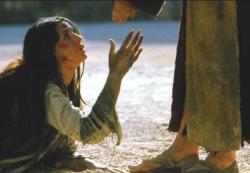
Anyway, I appreciated Frank's most recent post, and wanted to post it here as well. If any of you are tempted to think of Christmas as simply a quaint holiday that's mostly about family and friends and presents with an occasional hat-tip to Jesus, you're in danger of wasting your Christmas this year, and for the rest of your life. Frank exhorts us not to waste our Christmas. Enjoy.
My point, so far, is that God’s wrath is coming, and Jesus — whose birth we celebrate at Christmas — is the savior from that wrath. It’s a point a lot of people got because that’s what a savior is — and it’s a point I have made here before, so you were probably with me on it by way of preparation, one way or the other.Now, the question is: is that enough? That is, if we understand that what we deserve is God’s wrath and what we get is God’s savior, can we now have some ham and some applesauce and some casserole and maybe (in presbyterian and Lutheran homes, of course) a glass of wine, a decent night’s sleep, and then open the presents on Christmas morn after an appropriately-solemn reading of Luke 2? I mean, seriously: enough’s enough.
Listen: Christmas is not about a logical argument, an intellectual affirmation, and then a secular session of either greed or idolatry (or maybe both). Christmas is about God with us.
When the Jews had the Temple, God’s wasn’t “with us”: He was nearby, to be sure, but He was separated ritually and physically from the people. He had a covenant with the Jews, and He gave them the means to sort of “pay up” or “make up” the ways in which they broke the covenant, but here’s what He says about that:For I desire mercy, not sacrifice,
and acknowledgment of God rather than burnt offerings.Two little lines in the book of Hosea — a book in which God says that the right way to see the relationship between Israel (the chosen nation) and God is that God is a faithful husband and Israel is a wife who prefers the life of a prostitute to the life of fidelity. But Hosea has to go and buy his wife back out of prostitution to make himself like God in this object lesson prophecy.
The obvious application is that God is coming back for us when we don’t deserve it — you’ve all heard that one, I am sure. But look: when God is spelling it out for Israel in Hosea 6:6, God is saying, “You know: I don’t want you just to think about what I have done this for you, I want you to acknowledge that I have done this for you and act like I am real to you.”
I think that’s a little dazzling, frankly. God doesn’t want to just save us: God wants us to act like a wife bought out of prostitution.
We don’t have to be people who are in it for the money anymore — because the price for us has been paid forever. We don’t have to work off our debt. Now, that sounds like standard christianese, I am sure — and the best way to overcome that is to describe for you in detail what the life of a prostitute is like. However, homeschool moms are reading this, and they would probably find that a little much — and they might be right. I’ll sum it up in a sentence: imagine a life in which your own body is not safe from the demands and impulses of others who care nothing about you. If you were stuck in a life where you don’t even own your own body, or have a right to your own flesh, how would you act toward the person who paid the price for your body and set you free from that kind of slavery?
That’s the razor’s edge at Christmas: it’s the place where mental assent doesn’t cut it. We can’t just agree that these things are true for us in some religious metaphor, or maybe in some metaphysical transaction. We have to be in love with the one who has actually done this for us. We have to live as if God is with us. God doesn’t want us to go and offer a dove or a lamb or a bull in the temple: God wants us to love Him above all things because He deserves to be loved above all things. And He should get it right now because He is worthy of it right now — in the same way you love your own spouse right now personally, passionately, and somewhat impulsively.
This Christmas thing — it shouldn’t be about an idea of God: It should be about God. In person. Here with us.
When we prepare for Christmas, we ought to be loving God in a real way — because He is saving us in a real way, and He is here with us. Welcome Him into your family and life as if He was your beloved husband and deliverer from slavery.
Monday, December 14, 2009
Christmas Stuff
So as we're getting ready to head home, things are a bit hectic and I haven't had time to write Monday's post. Lucky for you, my friend Dan Phillips has come up with some gems related to the season that I've thoroughly enjoyed. Hopefully you will too.
The first is a great story about the best Christmas decorations ever. I was never very festive around Christmas time. The lights and the decorating the tree and the window stick-ons and the lawn ornaments never really appealed to me. But I really enjoyed this idea:


That's just priceless.
I also enjoyed the following:
The first is a great story about the best Christmas decorations ever. I was never very festive around Christmas time. The lights and the decorating the tree and the window stick-ons and the lawn ornaments never really appealed to me. But I really enjoyed this idea:
That's just priceless.
I also enjoyed the following:
Oh, and just in case any of you wanted to know what I might want for Christmas (:oD), you can click here. Thanks!
Subscribe to:
Posts (Atom)


