Showing posts with label Sermons. Show all posts

Monday, October 25, 2010

Friday, September 17, 2010

What Love for God Is and Isn't

I was listening to a sermon by John Piper on Romans 8:28 this week (as I've been listening through his Romans series, chapters 6 through 8) called "All Things for Good." And I was just overwhelmed with delight to come to this point in his sermon. He was discussing the "those who love God" part of Romans 8:28, and thus discussing what it means for us to love God. In order to do that, he also spent some time discussing what love for God is not.

I've spent some time (with Piper's help) trying to unfold this doctrine of love for God in my own thinking here and here, along with the posts under the "Love of God" tag that can be found on the sidebar. Yet what Piper said in this sermon is exactly what I want to say, and exactly what my soul resonates with.

This topic -- what it means to love God -- is what the universe is about. And so when I hear these things, everything I experience of reality is that much more real. When I'm contemplating the purpose for which I was created, I am more alive than at any other time. I am made to worship more greatly and more purely, which is to say, I enjoy God more at this time than at any other time. I pray that the same be true for you.

If you'd like, you can listen to the sermon as well here. The stream loads pretty quickly, and the section that the below edited transcript is taken from starts at either "-27:00" or "-22:10." For whatever reason it seems like two different versions might load. So you can just let it load for a minute and then click over to -27:00 or -22:10 and listen along. (I always recommend listening to Piper along with reading him when possible.)

Anyway, he says:

What the Love of God Is Not

So what does it mean to love God? How can you know if you are in this number? The best way I can think to make the answer clear is to say three things that love for God is not. At least the essence of love for God is not these three things.

Loving God is not meeting his needs. The way we love man is different from the way we love God. In Acts 17:25 Paul said, "He [is not] served by human hands, as though He needed anything, since He Himself gives to all people life and breath and all things." God is radically different from us. He is the source of all things and has no needs. He cannot be helped or improved. There are no defects to reverse or deficiencies to supply. We cannot love him by supplying his needs. He has none. Therefore the essence of our love for him must be an experience of receiving. (And I do regard joy as essentially receiving pleasure from the object of our delight.)

That leads to the second thing that love for God is not. Loving God is not, in its essence, love for his gifts – gifts like forgiveness, justification, escape from hell, resurrection to a pain-free life, etc. Indeed if we love God, we will cherish these gifts and be thankful for them, because we would not have God without them. But loving God is treasuring God himself revealed in his gifts and treasuring God himself beyond his gifts. His gifts are precious to the degree that they bring us to God and show us more of God. When you love God, God is central in your affections, not his gifts.

This word "affections" leads us to the third thing that love for God is not. The essence of loving God is not the things that love for God prompts you to do. Love for God may prompt you to leave mother and father and forsake all that to declare his glory among the nations. But leaving mother and father and forsaking all are not the essence of love – they are the fruit of love. Jesus said, "If you love Me, you will keep My commandments." This does not mean keeping his commandments is love. It means love is the kind of heart that prompts you to keep commandments.

In John 21:15-17 Jesus illustrates this connection when he asks Simon Peter three times, "Do you love me?" When Peter says, "Yes," Jesus does not say, "Good, that must mean you are obeying my commandments, because obeying my commandments is love." No, he said, "Feed my sheep." In other words, if you love me, act like it. Love my flock and feed them. Feeding sheep is the fruit of loving Jesus.

In other words, what I am saying is that love for God is a matter of the heart’s esteem for God before it produces anything else. It is something internal and involves spiritual emotions. It is not, in essence, a deliberated choice or a deed. It is more like a reflex of the heart to the perfections of God revealed especially in Christ. If you equate the deeds of love with the essence of love you will produce hypocrites – people who imitate the deeds and claim to love God when their hearts are far from him. If you equate love for God with love for his gifts, you produce hypocrites – people who are very glad to feel forgiven and declared righteous and delivered from hell and heaven-bound, but have no pleasure in God himself. They don’t love God. They just don’t want to have bad guilt feelings or go to hell.

What the Love of God Is

Therefore I think it is absolutely crucial that we clarify what the essence of love for God is. Let me grasp for the kinds of words that I think will help us know if we love God. Loving God is desiring God himself beyond his gifts. Loving God is treasuring God himself beyond his gifts. Love for God is delighting in God himself beyond his gifts. Love for God is being satisfied in God himself beyond his gifts. Love for God is cherishing God himself beyond his gifts. Love for God is savoring God himself beyond his gifts. Love for God is valuing God and prizing God and revering God and admiring God beyond his gifts. All these words are grasping for that essential response of the heart to the revelation of the glory of God, especially in Christ through the gospel. It is a glad reflex of the heart to all that God is for us in Christ.

Friday, September 10, 2010

The Three Most Important Realities of Life

I have the outstanding privilege every Tuesday and Thursday morning to gather with my brothers in seminary, read the Word together, worship together, pray together, and sit under wonderful exposition of the Scriptures together.

This Thursday morning was no different. We had the privilege of listening to the preaching of Rick Holland, which is always a pleasure. He is fast becoming a favorite of mine to listen to. He is a man who worships over the Word of God as he presents it, thereby helping those in the pews to worship over the Word of God as its presented. (I'm still praying God brings him back to the M. Div. program to teach preaching.)

Anyway, his message, entitled, "Ministry and the Reality of Death," treating Hebrews 9:27-28, was an absolute treat. It was the kind of sweet sting (or, stinging sweetness) that we all need to experience as often as we can, especially as it regards the universality and inevitability of death, the certainty of judgment, and the accomplishment of salvation in Christ. I talk a little bit more about that in this post, on why we need to talk about ultimate things in general and about hell in specific.

I really commend Rick's message to you. You can stream it by clicking here, and you can download it by clicking here. Please do yourself the favor, the benefit, of listening to his message.

He outlined the three most important realities of life from Hebrews 9:27-28, and they are as follows:
  1. Death is Unavoidable
  2. Judgment is Certain
  3. Salvation is Possible
These realities compel us to "preach the Gospel not some time, but every time."

And inasmuch as it is appointed for men to die once
and after this comes judgment,

so Christ also, having been offered once to bear the sins of many,
will appear a second time for salvation without reference to sin,
to those who eagerly await Him.

- Hebrews 9:27-28 -

Tuesday, April 20, 2010

What is the Bottom of Your Joy?

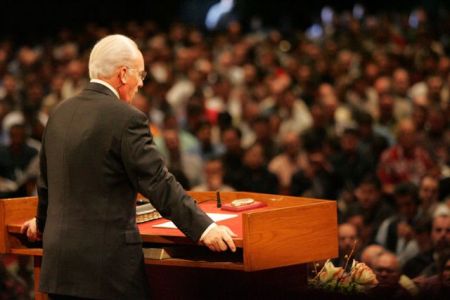
On Sunday, John Piper preached a sermon to his congregation to clarify a statement he's made (or actually, a question he's asked) for years to try to locate the believer's joy in God and not in himself. He was speaking to them specifically with a view to his upcoming 8-month sabbatical, and wanted to leave this message with them in his absence.

I read the notes of the sermon, though I haven't listened to it, and I found it to be a very refreshing read. It articulates some of the things that I was trying to express in this post last week, especially in the last paragraph. I re-post it here and leave it with you, confident that it will benefit you as it has me.

Before I get to his actual notes, here's a video excerpt of something I think everybody who can understand English needs to hear. It has to do with what a Christian, most foundationally, is; that is, at the most foundational level, what makes a Christian different from a non-Christian.


The Bottom of Our Joy: God, Not Self

I have been asking audiences for years: “Do you feel more loved by God because God makes much of you, or because God, at great cost to his Son, frees you to enjoy making much of him forever?” The aim of that question has never been to deny that God makes much of us. He does. (Which we will see shortly.) The aim has been to help people relocate the bottom of their joy—the decisive foundation of their joy—from self to God.

More Concerned About the Hell-Bound

Let me try to help you understand what shapes so much of what I say. A people ought to understand their pastor. I am more concerned about nominal hell-bound Christians who feel loved by God, than I am about genuine heaven-bound Christians who don’t feel loved by God.

Please don’t hear me as uncaring or indifferent to genuine Christians who don’t feel loved by God. I do care, and this sermon is especially for you. At this point, I’m simply trying to give you a perspective on why I emphasize what I do. There are millions of nominal Christians who are not born again who believe God loves them and yet are on their way to hell. And the difference between them and a born again believer is this: What’s the bottom, the decisive foundation, of their happiness? As you penetrate down deeper and deeper to the core, or the bottom, of what makes you happy, what is it?

Jesus Is Not a New Butler

Millions of nominal Christians have never experienced a fundamental alteration of that foundation of happiness. Instead they have absorbed the notion that becoming Christian means turning to Jesus get what you always wanted before you were born again. So, if you wanted wealth, you stop depending on yourself for it, and by prayer and faith and obedience you depend on Jesus for wealth. If you wanted to be healthy, you turn from mere human cures to Jesus as the source of your health. If wanted to escape the pain of hell, you turn to Jesus for the escape. If you wanted to have a happy marriage, you come to Jesus for help. If you wanted peace of conscience and freedom from guilt feelings, you turn to Jesus for these things.

In other words, to become a Christian, in this way of seeing things, is to have all the same desires you had as an unregenerate person—only you get them from a new source, Jesus. And he feels so loving when you do. But there’s no change at the bottom of your heart and your cravings. No change in what makes you happy. There’s no change in the decisive foundation of your joy. You just shop at a new store. The dinner is still the same; you just have a new butler. The bags in the hotel room are still the same; you just have a new bellhop.

A New Bottom for Our Joy in the New Birth

That’s not what the new birth is. It’s not having all the same desires that you had as an unregenerate person, and just getting them from a new source. The new birth changes the bottom, the root, the foundation of what makes us happy. Self at the bottom is replaced by Jesus. God, himself.

What makes the born-again person glad is not at bottom that they have God’s gifts, but that they have God. This is what I am more concerned about than genuine Christians who are truly on their way to heaven, and don’t feel loved by God. And my shorthand way of trying to awaken people to the dangers of feeling loved by God while being unregenerate is to ask: Do you feel more loved by God because he makes much of you, or because, as great cost to his Son, he frees you to enjoy knowing him and treasuring him and making much of him?

Why God Makes Much of Us for His Own Glory

But today I am jealous that this concern of mine not undermine the immeasurable way God loves you who are born again, including by making much of you—indeed, making much more of you than you ever dreamed.

So here is my new way of coming at this issue. I ask: Why does God perform all his acts of love toward us in a way that reveals he is loving us for his own glory? Why does God relentlessly reveal his love to us by telling us in the Bible that he is loving us for his own name’s sake? It is an urgent question because there are so many who say or feel that it isn’t love if God’s aim is to magnify his own glory. Or they feel: You say he is making much of me, but in fact he isn’t making much of me if his design is that he be made much of in making much of me.

I tremble just to say those words. It isn’t so. I want to show you—I want to help you see and feel—that you are more loved by God when he loves this way. He makes much more of you when he makes much of you this way. Please don’t turn this off. Ask God to help you see what we are about to see in the Bible.

Examples of God Loving Us for His Own Glory

Just a few examples of what I mean by God performing all his acts of love toward us in a way that reveals he is loving us for his own glory.

1. God shows his love for us by predestining us for adoption into his family.

He predestined us for adoption as sons through Jesus Christ, according to the purpose of his will, to the praise of his glorious grace. (Ephesians 1:5-6)

God loved us in eternity before we were created, and he planned to make us his children by adoption. And the aim of this love was “to the praise of the glory of his grace.” He loved us this way that we might praise his grace. A regenerate person loves to praise God’s grace in our adoption. A nominal Christian simply loves the natural benefits of adoption.

2. God shows his love for us by creating us.

Bring my sons from afar and my daughters from the end of the earth, everyone who is called by my name, whom I created for my glory. (Isaiah 43:6-7)

God loved us in bringing us into being that we might enjoy forever all the good he plans for us. And he did it, he says, for his glory.

3. God shows his love for us by sending us a Savior.

“Fear not, for behold, I bring you good news of great joy that will be for all the people. For unto you is born this day in the city of David a Savior, who is Christ the Lord. And this will be a sign for you: you will find a baby wrapped in swaddling cloths and lying in a manger.” And suddenly there was with the angel a multitude of the heavenly host praising God and saying, ‘Glory to God in the highest.’” (Luke 2:10-14)

We get the Savior; he gets the glory. We get the “great joy”; God gets the praise. That is God’s design in sending his Son.

4. God shows his love for us when Christ died for us.

For the love of Christ controls us, because we have concluded this: that one has died for all, therefore all have died; and he died for all, that those who live might no longer live for themselves but for him who for their sake died and was raised.” (2 Corinthians 5:14-15)

Christ loved us, died for us; and the aim was that we might live for him. He pursues his glory through our salvation. And if you wonder why we read Psalm 79 at the beginning, it was because of one verse, verse 9:

Help us, O God of our salvation, for the glory of your name; deliver us, and atone for our sins, for your name’s sake! (Psalms 79:9)

Born-again people pray like this. They see their salvation primarily as a gift of the ability to see and savor and show the glory of God.

5. God shows his love for us in the way Jesus prays for us.

“Father, I desire that they also, whom you have given me, may be with me where I am, to see my glory that you have given me because you loved me before the foundation of the world.” (John 17:24)

“With” him. He prays that we be with him. And why does that make us happy? O he will give us many things. But the bottom of our joy, the decisive foundation of our happiness will be this: We will see his glory. Our Savior, not our self, will be the bottom of our joy.

The point of those five texts is to show that throughout the Bible, God performs all his acts of love toward us in a way that reveals he is loving us for his own glory.

Why does he do it this way?

How Much God Does Make of Us

Before I answer, it’s crucial in this message to emphasize that God’s love for us includes making much of us in ways that take our breath away. They are so over-the-top that we are scarcely able to believe how much he makes of us. A few examples of what I mean:

1. God makes much of us by being pleased with us and commending our lives.

Alan Jacobs said that C. S. Lewis’ greatest sermon was “The Weight of Glory.” And in that sermon, what is the weight of glory that every true Christian will bear? To the hear the words, “Well done, good and faithful servant.”

To please God . . . to be a real ingredient in the divine happiness . . . to be loved by God, not merely pitied, but delighted in as an artist delights in his work or a father in a son—it seems impossible, a weight or burden of glory which our thoughts can hardly sustain. But so it is. (“Weight of Glory,” 1965, p. 10)

2. God makes much of us by making us fellow heirs with his Son, who owns everything.

  • “Blessed are the meek, for they shall inherit the earth.” (Matthew 5:5)
  • “The promise to Abraham and his offspring [is] that he would be heir of the world.” (Romans 4:13)
  • “Let no one boast in men. For all things are yours, whether Paul or Apollos or Cephas or the world or life or death or the present or the future—all are yours, and you are Christ’s, and Christ is God’s.” (1 Corinthians 3:21-23)

3. God makes much of us by having us sit at table when he returns and serving us as though he were the slave and we the masters.

“Truly, I say to you, he will dress himself for service and have them recline at table, and he will come and serve them.” (Luke 12:37)

4. God makes much of us by appointing us to carry out the judgment of angels.

“Do you not know that we are to judge angels?” (1 Corinthians 6:3)

5. God makes much of us by ascribing value to us and rejoicing over us as his treasured possession.

  • “Are not two sparrows sold for a penny? And not one of them will fall to the ground apart from your Father. . . . Fear not, therefore; you are of more value than many sparrows.” (Matthew 10:29-31)
  • “The Lord your God . . . will rejoice over you with gladness; he will quiet you by his love; he will exult over you with loud singing.” (Zephaniah 3:17)

6. God makes much of us by giving us a glorious body like Jesus resurrection body.

  • “He will transform our lowly body to be like his glorious body, by the power that enables him even to subject all things to himself.” (Philippians 3:21)
  • “The righteous will shine like the sun in the kingdom of their Father.” (Matthew 13:43; cf. Romans 8:30)

7. Most amazingly God makes much of us by granting us to sit with Christ on his throne.

  • “The one who conquers, I will grant him to sit with me on my throne, as I also conquered and sat down with my Father on his throne.” (Revelation 3:21)
  • Or as Paul says, “The church . . . is his body, the fullness of him who fills all in all.” (Ephesians 1:22-23)

We are destined to share in the governing of the universe with divine-like authority.

Let it be known loud and clear, God makes much of his Son’s bride, the church. God loves the church with a kind of love that will make more of her than she can ever imagine. All this is yours, if you are belong to Christ (Romans 8:9).

Why God Reminds Us That He Loves Us for His Glory

The final decisive question is: Why does God, who loves so much, and who makes much of us so extremely, remind us again and again that he does all this for his own glory? Why does God remind us over and over that he makes much of us in a way that is designed ultimately to make much of him?

The answer is this: Loving us this way is a greater love. God’s love for us, that makes much of us for his glory is a greater love than if he ended by making us our greatest treasure, rather than himself. Making himself our end is a greater love than making us his end.

Self Will Never Satisfy

The reason this is greater love is that self, no matter how glorified by God (Romans 8:30), will never satisfy a heart that is made for God. God loves you infinitely. He sent his Son to die that he might have you, and that you might have him (1 Peter 3:18). He will not let you settle for wonderful and happy thoughts of self. Not even a glorified self. He will not let your glory, which he himself creates and delights in, replace his glory as your supreme treasure.

God’s Greatest Gift

Bethlehem, I leave this truth with you while I am away for these months. Glory in this. Take heart from this. Rejoice in this. Be strengthened by this. You are precious to God, and the greatest gift he has for you is not to let your preciousness become your god. God will be your God. God alone forever. And this is infinite love.

Tuesday, March 16, 2010

The Glory of God and Preaching

One of my many privileges as a student at The Master's Seminary is sitting under excellent preaching on a fairly regular basis. Last week I was -- get this -- required to attend the Shepherds' Conference. (Those are the kinds of requirements I can deal with!) At the conference, Al Mohler preached a message on John chapter 9, where the man born blind is healed by Jesus. And he taught us that the entire chapter hinges upon Jesus' response to the disciples' question about why the man was born blind, namely: It was so that the works of God might be displayed in him. Dr. Mohler went on to emphasize that that is the very reason that everything is the way it is. When people say, "Everything happens for a reason," this is that reason. The answer to the question, "Why?" is in John 9:3. And then he specifically related that to pastoral ministry. I pray you'll be as benefited as I was.


Everything is as it is on purpose. And that purpose is that the works of God might be displayed. Our God is about putting Himself on display!

There are no little texts because everything exists to display the glory of God. God does everything to His own glory, and therefore God says everything to His own glory. This ought to shape how you read your Bible and how you preach to your congregation! (Or, if you're not a preacher, it should shape how you handle Scripture in general, how you speak truth to your neighbor [Eph 4:25], how you counsel people, how you encourage people, how you evangelize.)

"The reason the cosmos exists -- everything that exists -- all the billions of stars, all the infinitude of expanding space, all that we can measure and all that is immeasurable -- it all exists for one purpose alone!" And that is that God determined to magnify His work and His worth by saving a people through the blood of His Son!

What explains all that is and ever has been? The answer is that the works of God might be displayed. That God might display Himself.

If you don't know that everything exists to display the glory of God, including every text of the Bible, then you cannot have any grasp of authorial intent, which is the cornerstone of our exegesis. In every passage of Scripture, God's authorial intent is to display the glory of His majesty, the beauty of His manifold perfections. If you don't know that, if you don't believe that, if you don't love that, well then like Dr. Mohler says: don't preach.

This knowledge of God's ultimate purpose in all that He does in all of history is what drives our ministry. "Because we know," he says, "we preach." Because it has been given to us to know that the most glorious Being in the universe has so acted as to display the beauty of that glory most fully in everything that happens -- and supremely in the sacrifice of His own Son for sinners -- we can't help but open our mouths and tell people about it! We believe, therefore we speak (2Cor 4:13)!

He goes on to give the implications of this truth for pastoral ministry. He says:
  • We are to stake our lives on this truth
  • We are to establish our ministries on this truth
  • Believing this truth demands that we will have a high view of God
  • Believing this truth will ensure that we preach a God-centered Gospel
  • This truth will drive our conviction
  • This truth will fuel our passion
  • This truth is as life unto us
  • And that will affect our preaching!
For the love of God, brothers, preach, speak, teach, live, act, counsel, minister like you know that God's purpose in everything that He does is to display His glory! Look at every single person that you minister to in your church, look at every single circumstance of your life, and recognize that they are there so that the works of God might be displayed in Jesus Christ to His glory in all things!

Do we believe this or not?

Dear Jesus, open our eyes.

Tuesday, March 2, 2010

Piper on What Preaching Is

As I've been thinking about the themes of Friday's post on what it means to do practice Biblical ministry, I was reminded of the following video clip. John Piper takes a few moments at the beginning of a sermon to tell those new to his church what he believes preaching is and thus what they can expect as they come week to week. As he explains that preaching is expository exultation, he is effectively commenting on the "proclaim," from "Him we proclaim" (Col 1:28) from Friday's post. I believe he really captures the solemnity of Paul's charge to Timothy to preach the Word (2Tim 4:2), and thus presents the foundation for a Biblical philosophy of ministry.


Do you mean that by 'preaching'? Is that what you, dear pastor, commit yourself to do each week for your flock? Is that what you, dear Christian, commit yourself to sitting under and diligently listening to each week? Is that what you do when you seek to minister the Gospel to your friends, co-workers, and neighbors? Do you preach the Gospel? Do you proclaim the Word of God?

Preach the Word. This is the foundation of our entire ministry.

Him we proclaim.

And He ordered us to preach to the people,
and solemnly to testify
that this is the One who has been appointed by God
as Judge of the living and the dead.

- Acts 10:42 -

And we
preach to you the good news of the promise made to the fathers.
- Acts 13:32 -

We ...
preach the gospel to you
that you should turn from these vain things to a living God.
- Acts 14:15 -

Woe is me if I do not
preach the gospel.
- 1 Corinthians 9:16 -

Friday, February 19, 2010

The Atonement: Real or Potential?


This past Sunday morning was a communion Sunday at Grace Community Church, and so John MacArthur took a break from his regular series in the Gospel of Mark and preached a sermon called, "The Atonement: Real or Potential?"

I thought it was an extremely helpful presentation of the Biblical doctrine of the particularity of the atonement of Jesus Christ. What was happening on the cross from a divine perspective? Why and for whom did Christ die?

I encourage you to download the sermon. It is well worth the listen.

And you shall call His name Jesus, for He will save His people from their sins.
- Matthew 1:21 -

Wednesday, January 6, 2010

Update: Audio Available

Janna and I are traveling back to Southern California today after a wonderful three-week visit with friends and family for Christmas and New Year's. It's been a great trip and a joyful vacation. Perhaps I'll write a summary about it in the next few days.

For now, though, I have a different kind of update. The four-part Christmas series I posted a few weeks ago came from a sermon I was preparing. The audio of that sermon is now available, and can be downloaded from this link (right click, save link/target as).

I pray it's a benefit.

Friday, November 27, 2009

Luke 12:13-21: Portrait of the Wasted Life

Four Strategies by which We Must Guard Against All Greed and Covetousness

So our final project for Intro to Preaching at TMS was to preach a 12- to 15-minute sermon on a text of our choosing. I chose Luke 12:13-21, the Parable of the Rich Fool, and preached it to my fellow first-year TMS students. I called the sermon: "Portrait of the Wasted Life." Some of you have asked about it, and so I post it here in two parts.

A couple of things to note. I apologize in advance for speaking too quickly at points. We had to keep it under 15 minutes, and if you've known me for any amount of time you know that was a challenge for me. So if you have to rewind at a couple of points, I'm sorry. I hope it's worth it. Also, sorry for the weird camera angle. My professor set it up where he usually sits and not at a straightaway angle from the back. And also, the prayer gets cut off at the end. Basically, I prayed that the Lord would apply His Word to my heart as well as the hearts of my listeners.

I suppose those are enough qualifications. I pray that this will be a benefit to you. The preparation certainly challenged me to examine what the source of my comfort and contentment is. May God give us grace to live like our citizenship is in Heaven and not on Earth, especially in the realm of the pocket book.


For what is a man benefited
if he gains the whole world,
and loses or forfeits himself?
- Luke 9:25 -

Do not be afraid, little flock,

for your Father has chosen gladly to give you the kingdom.
Sell your possessions and give to charity;
make yourselves money belts which do not wear out,
an unfailing treasure in heaven,
where no thief comes near nor moth destroys.
For where your treasure is, there your heart will be also.
- Luke 12:32-34 -

Monday, November 23, 2009

No Other Gods

Last week Phil Johnson preached at Grace Community Church in the stead of John MacArthur, who has been recovering from knee replacement surgery and also a recent herniated disc in his back. (Be praying for Pastor John.)

Phil's sermon was from Exodus 20:3, the first commandment. It was a magnificent sermon. The man spoke from God, and the conviction and the weightiness that he conveyed -- so absent from so many modern pulpits -- were appropriate as a man speaking from God to His people. Phil's message exalted the Lord in our hearts, and encouraged me personally all the more to delight in Him and Him alone, and thus have no other gods before Him.

I wanted to share it with you all, as I believe the sense of the majesty of God that is conveyed would be a blessing to anyone listening. I think it is a wonderful call to worship God for His awful holiness, which helps us sanctify Christ as Lord in our own hearts, as well as excite us to help others do the same.

Click to stream. Right click, save link as, to download.

Wednesday, June 24, 2009

The Gospel of Jesus Christ

Albert N. Martin was the pastor at Trinity Baptist Church in Montville, NJ for over 40 years. He recently moved to Michigan with his new wife to be closer to her family. On June 7th, he returned to Trinity and preached during the Sunday morning service.

I don't go to Trinity, but I've visited on multiple occasions to sit under Pastor Martin's preaching. The man is truly a gift of the Lord Jesus to His Church. We ought all to pray for more men like this man.

So I went back to Trinity with a good friend of mine who is a member there a few weeks back. And I was excited. I was looking forward to hear what Pastor Martin had to say. What wonderful message, exhortation, rebuke, did he have for the congregation he loved and shepherded for nearly half a century?

He began his message by talking about the Bible, how it's quite a large book, and really is more like a library, being a collection of books. And then he started talking about the overarching message of the Bible that's recognizable in certain "capsule statements" that are given throughout revelation.

From 04:03 to 04:39: God has given us these wonderful little capsule statements that give us the heart of the whole message of the Bible. And those statements become like a door into this marvelous, panoramic, overarching message of Bible. And if you can grasp those particular portions, you have a handle on what the Bible is all about.

And so then, as I was wondering what was coming, he announced his text: Isaiah 53:6.

And I, like an idiot, was disappointed. "Isaiah 53?" I thought. "This is no great message that he flew back to deliver. This is just the Gospel."

I've asked for repentance for that thought. God be gracious to me for such a thought. And yet, it's what I thought. Pastor Martin was going to preach on the Gospel. He announced two major headings:

1. The bad news of our desperate condition in sin.
2. The Good News of God's amazing provision for sin.

As he preached message, he progressively won me over. "There are so many people that need to hear this!" I thought. I must have thought of 10 people, specifically, who I would give this message to. He was responding to all sorts of arguments I've heard from these actual people. Awesome!

And then about 2/3 into the message, God's grace came to me in abundance. He made me so terrifyingly aware of my own sin before Him. He presented His holiness to me, and suddenly I realized that I was a sinner, and I desperately needed this message. It wasn't just the Gospel. It wasn't for others I could give it to. It was for me!

And oh how sweet my fellowship with the Savior was that morning! My gratefulness and thanksgiving overflowed like a new believer. This great news is my life. How wonderful it was to hear it unfolded, expounded, and unleashed into my heart.

Dear friends, I commend the Good News of Jesus Christ to you. Benefit yourselves by sitting down for an hour, perhaps with a friend or spouse or a family member, and sitting under the preaching of the Word of God, the very power of God unto salvation for all who believe.

The video and audio are available for download on sermonaudio.com. Some thoughts are highlighted below. I welcome your comments and interaction in the thread.


22:36 to 23:34 - Here is a description of our fundamental orientation in life. And what is it? It is self-terminating! We live unto ourselves. That's what Paul said in 2 Corinthians 5, verse 15: "That He, Christ, died for all that they who live should no longer live unto themselves." That's the statement of what has happened to us. Self-will, self-gratification, self-pleasing becomes the fundamental orientation of life, rather than God's will, God's purpose, God's design, God's desire. No, it's my will, my purpose, my ambitions.

This is a great indictment. We have turned each one of us to our own way. We live for ourselves. That's wasting our lives. We were created to live for the glory of God. And in the pursuit of God's glory, "self-will, self-gratification, and self-pleasing" are actualized and fully perfected, such that when I seek to find my will, gratification, and pleasure in Christ, I am not sinning in rebellion, but delightfully obeying my God. Because God's will, purpose, design, and desire is that we want what He wants, that we are gratified by Him, and that our pleasure be in Him.

23:37 to 25:31 - He has a great response to the objection, "But I never hurt anybody. I'm not a blight on society. I follow the rules. I help people. I love my neighbor. How can God be angry with that?"

But what's the common denominator between the hooker that's out on the street tonight plying her trade, the junkie looking for his next fix, and the polite, cultured, educated, upright person sitting here this morning who is a stranger to God's grace? What's the common denominator? Just this: they're both living to please themselves. ... You're living to yourself! God never gave you that mind to make a god of it, and bow down and worship it!

26:47 - "But," interjects the objector, "I'm only human. Human beings are flawed. That's what it is to be human. I can't be perfect. Nobody's perfect."

31:16 - The objector continues, "But God is a loving God. Sure He takes sin seriously, but He takes love more seriously. How can a loving God who understands my weakness and imperfection send me to hell?"

33:56 - A litmus test for any saving truth and saving religion. In what direction is the arrow?

40:22 - The dessert of sin. The cup of wrath that Jesus drank. The glory of substitution.

45:10 - The wonderful hymn that he reads is O Christ, What Burdens Bowed Thy Head. Below are the lyrics.

O Christ! What burdens bowed Thy head!

Our load was laid on Thee;

Thou stoodest in the sinner’s stead,

Didst bear all ill for me.

A Victim led, Thy blood was shed;
Now there’s no load for me.

Death and the curse were in our cup:
O Christ, ’twas full for Thee;
But Thou hast drained the last dark drop,
’Tis empty now for me!
That bitter cup, love drank it up;
Now blessing’s draught for me!

Jehovah lifted up His rod;
O Christ, it fell on Thee!
Thou wast sore stricken of Thy God;
There’s not one stroke for me.
Thy tears, Thy blood, beneath it flowed;
Thy bruising healeth me.

The tempest’s awful voice was heard,
O Christ, it broke on Thee!
Thy open bosom was my ward,
It braved the storm for me.
Thy form was scarred, Thy visage marred;
Now cloudless peace for me.

Jehovah bade His sword awake;
O Christ, it woke ’gainst Thee!
Thy blood the flaming blade must slake;
Thine heart its sheath must be;
All for my sake, my peace to make;
Now sleeps that sword for me.

For me, Lord Jesus, Thou hast died,
And I have died in Thee!
Thou’rt ris’n—my hands are all untied,
And now Thou liv’st in me.
When purified, made white and tried,
Thy glory then for me!

49:55 - "The glory of the Gospel is this. Hear me now. That in Gospel faith, the sinner in all the nakedness of his need, and the Savior in all the plenitude of His saving grace and power come together in the embrace of faith. No wafer, no water, no priest, no minister, no nothing between! Sinner, in all the nakedness of your need, the Savior, in the plenitude of His power, comes riding to you in the chariot of His Gospel! Lay hold of Christ and you'll have all the saving benefits that He purchased with His own precious blood! They're all in Him: peace with God, forgiveness, the gift of the Holy Spirit, the hope of eternal life, a resurrection body, His promised presence! You've just got oodles of blessing! But they're all stored up in the Savior. And He is yours if you'll have Him by faith this morning!"

He is yours if you'll have Him by faith right now. Don't waste your life by living for yourself. Turn from your sin and self-worship, and trust Christ to be your perfect, sin-bearing substitute. Repent and believe the Gospel!